Yamas are the foundation towards your Yoga journey.
In Patanjali Yoga Sutra, Chapter 2 sutra no. 29 it is mentioned.
यम नियमासन प्राणायाम प्रत्याहार धारणा ध्यान समाधयोऽष्टावङ्गानि ॥२९॥
yama-niyama-āsana-prāṇāyāma-pratyāhāra-dhāraṇā-dhyāna-samādhayaḥ aṣṭau-aṅgāni ||29||
Restraints, observances, posture, extending the breath,
withdrawal from the senses, concentration, meditation and integration
are the eight limbs.
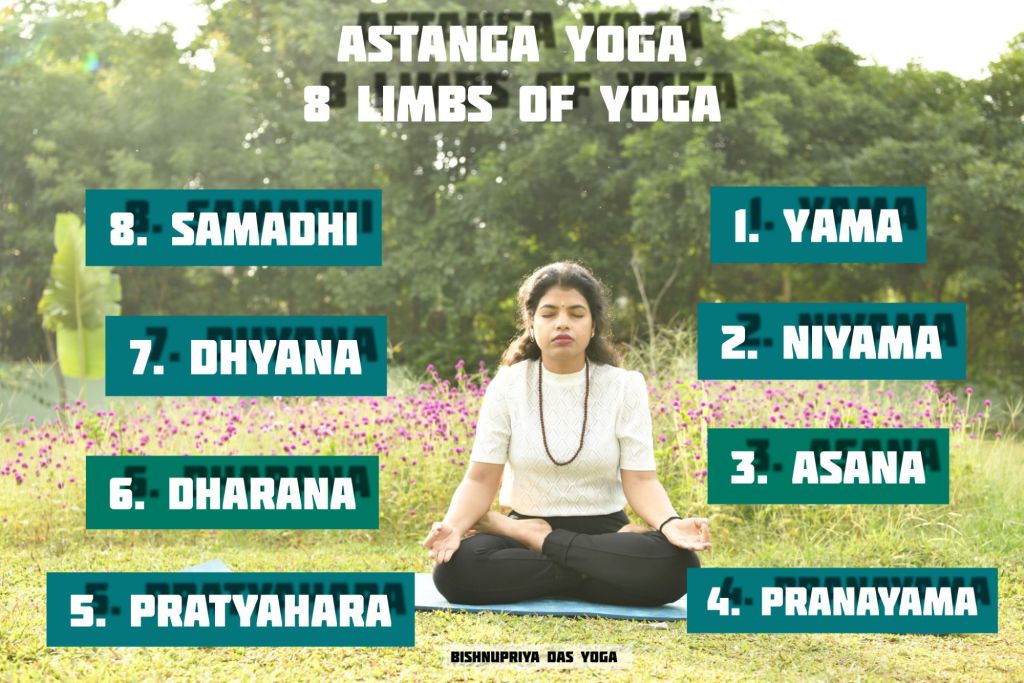
In path of Astanga Yoga – the 8 fold path about which, Maharshi Patanjali has talked about, the very first step is “Yama”. It must have such prime importance that before all of the paths/steps to achieve the highest goal in life, this comes in the first place.
In Sanskrit, ‘Ya’ means one who moves, ‘Ma’ means who creates, so it can be put together as somethings one needs to remove, to create the actual or divine you.
In another understandings as per Hindu mythology, ‘Yama’ is the God of death. And one has to refrain himself from certain qualities so that the God of death not torture him after death.
Yamas are set of moral disciplines that one need to follow, to succeed in the path of Yoga, this has to be mastered.
The idea of Yoga is to work on yourself practically using the 8 fold path, one can attain Sattvic state of mind, which also helps to reduce the Kleshas.
Yama is the foundation towards your Yoga journey.
In Patanjali Yoga Sutra, Chapter 2 sutra no. 30, the types of Yamas are mentioned
अहिंसासत्यास्तेय ब्रह्मचर्यापरिग्रहाः यमाः ॥३०॥
ahiṃsā-satya-asteya-brahmacarya-aparigrahāḥ yamāḥ ||30||
Translation: Non-harming, truthfulness, non-stealing, conservation
and non-grasping are the restraints.
Ahiṃsā – Non-violence
Satya – truthfulness
Asteya – Non-stealing
Brahmacarya – state of continence and chastity
Aparigraha – Non-possessiveness; Non-covetousness
1. Ahimsa/Non-violence:
This means no himsa, no violence all the times. Further more, it is also not to harm others by Word/ thought/ action. It is not limited to only physically harming someone.
As per the Indian philosopher Vijnana Bhikshu;
“As the little feet of all the animals fit into of an elephant, all other virtues of Yama are included in Ahimsa”
In Mahabharat, Chapter 114 of Anushasana Parva explains about Ahimsa,
अहिंसा परमो धर्मस्तथाहिंसा परमो दमः
अहिंसा परमं दानम् अहिंसा परमस्तपः
अहिंसा परमो यज्ञस्तथाहिंसा परमं बलम्
अहिंसा परमं मित्रम् अहिंसा परमं सुखम्
अहिंसा परमं सत्यम् अहिंसा परमं श्रुतम् ||
Ahimsa is the highest duty, Ahimsa is the highest self-control;
Ahimsa is the greatest gift, Ahimsa is the best austerity;
Ahimsa is the highest sacrifice, Ahimsa is the finest strength;
Ahimsa is the greatest friend, Ahimsa is the greatest happiness;
Ahimsa is the highest truth, Ahimsa is the greatest teaching.
2. Satya/ Truthfulness:
Speaking Satya is one’s innate quality; to speak untruth you need training.
Satya is speaking the TRUTH, and how / what need to be said, lets elaborate
. Speak truth everywhere , every time, not selectively.
. It should not hurt others. Just because you are saying the truth does not mean that you can hurt others intentionally.
. If speaking Satya does not add any value to the situation/ conversation or person then that is mere a sentence not truth.
3. Asteya/ Non- stealing:
Not taking anything that doesn’t belongs to you whether material, or ideas. It goes one step further also that, not having the thought or idea of possessing that’s not yours. It only comes when you are completely content {Santosh} or satisfied.
4. Brahmacharya/ state of continence and chastity:
It comes from the combination of two words, ‘Brahma’ the supreme and ‘charya’ act or path. following the path of Brahman. In simpler way, controlling the senses following moderation and most importantly purity in sex life.
5. Aparigraha, Non-possessiveness; Non-covetousness:
Parigraha means excessive attachment to objects. And one defines oneself by these objects. So Aparigraha basically means not to accumulate things more than you need. With more material possession one developes more attachment and this becomes a hindrance in the path of Yoga.
Yamas are the essence of your own true self. And it shapes you as a person, makes you ready for advancing in the path of Yoga.
#tyi #yoga #theyogainstitute #yama #discipline #philosophy #yogastudy

Leave a comment