Have you ever wondered why traditional Hatha Yoga gives so much importance to purification before the practice of Pranayama?
Today, when we speak about yoga, we often begin with Asana and Pranayama. But when I started studying the Hatha Yoga Pradipika, I became more curious about something that is frequently overlooked: Why did the traditional yogis place so much emphasis on preparing and purifying the body before advancing towards Pranayama?
The answer, as explained in the traditional Hatha Yoga approach, goes much deeper than physical cleanliness.
Hatha Yoga Begins with Preparation
In the Hatha Yoga Pradipika, Swatmarama introduces Shatkarma, the six cleansing practices, as an important part of Hatha Yoga.
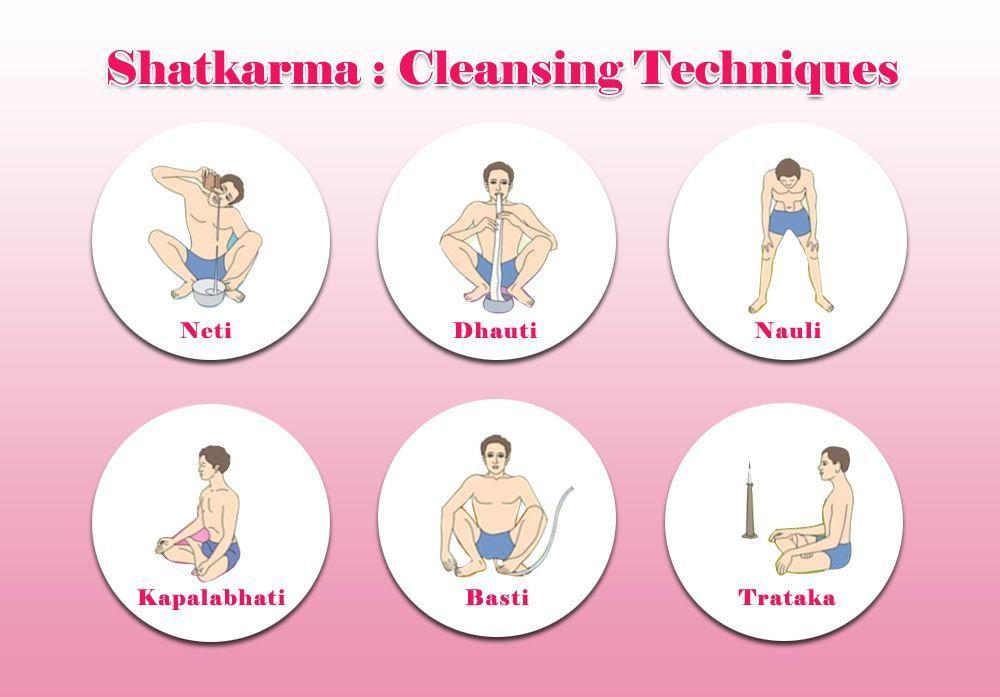
These practices are:
- Dhauti: Cleansing practices for the digestive tract and stomach.
- Basti: Yogic cleansing of the lower intestinal tract.
- Neti: Cleansing the nasal passages using water or a thread.
- Trataka: Steady and continuous gazing at a fixed point.
- Nauli: Isolation and churning of the abdominal muscles.
- Kapalbhati: A cleansing practice involving active expulsion of breath or nasal cleansing techniques.
The commentary explains that Hatha Yoga begins by addressing the purification of the body and its systems. The purpose is not simply to make the body flexible or physically fit, but to prepare the practitioner for further yogic practices.
This made me reflect on how often we rush towards advanced practices without giving sufficient attention to preparation.
In traditional Hatha Yoga, preparation is not a secondary activity. It is an essential part of the journey.
Why Is Purification Important Before Pranayama?
Pranayama is not merely the act of breathing slowly or deeply.
According to the traditional explanation in the book, Pranayama works with prana and its movement through the Nadis= energy channels. The commentary places particular emphasis on Ida and Pingala and explains that Shatkarma helps remove blockages and prepare the system for higher practices.
The text also discusses the relationship between prana and mind.
चले वाते चलं चित्तं निश्चले निश्चलं भवेत् ।
योगी स्थाणुत्वमाप्नोति ततो वायुं निरोधयेत् ॥ २ ॥
Transliteration
Chale vāte chalaṁ chittaṁ niśchale niśchalaṁ bhavet |
Yogī sthāṇutvam āpnoti tato vāyuṁ nirodhayet || 2 ||
Meaning
“When the breath is unsteady, the mind becomes unsteady. When the breath becomes steady, the mind also becomes steady. The yogi attains steadiness; therefore, the breath should be regulated.”
This is one reason the Hatha Yoga tradition gives importance to preparing the system before progressing towards more advanced Pranayama.
The purpose is to establish a suitable foundation for the practice, rather than approaching it without preparation.
Is Shatkarma Necessary for Everyone?
This is an important point that I do not want to overlook.
The Hatha Yoga Pradipika, Chapter 2, Verse 21, distinguishes between practitioners who require purification and those whose doshas are already balanced.
The commentary explains that Shatkarma is not necessarily required by everyone. Its application depends upon the practitioner’s condition and requirements.
This means that traditional Hatha Yoga is not simply about performing more techniques. It is also about understanding when a particular practice is appropriate.
Shatkarma practices are powerful and should be learned under the guidance of a qualified and experienced teacher.
The Sequence of Hatha Yoga
The commentary on Chapter 1, Verses 55–56, explains the general sequence:
Asana → Pranayama → Mudra and Bandha → Meditation
Where purification is required, Shatkarma forms a preparatory stage before the relevant higher practices.
The commentary further explains that Asana prepares the physical body, Pranayama works with the Nadis and Prana, and Mudra and Bandha are used for further channelisation of energy.
Finally, the practitioner sits quietly in a meditative posture and develops concentration.
When I look at this sequence, I see a gradual progression rather than a collection of independent techniques.
Each stage prepares the ground for what follows.
Yoga Is Not About Rushing Towards the Next Practice
One thing that traditional Hatha Yoga reminds me of is that the journey is not about collecting more and more techniques.
It is about preparation, discipline and understanding.
Before seeking steadiness of mind, the practitioner works with the body. Before progressing towards higher practices, the foundation is given attention.
Perhaps this is one of the important lessons we can take from traditional Hatha Yoga today: the quality of our preparation matters as much as the practice we are eager to perform.
Yoga is not merely about what we do on the mat. It is also about how consciously we approach each stage of our practice.
Source: Hatha Yoga Pradipika: Light on Hatha Yoga, commentary by Swami Muktibodhananda, under the guidance of Swami Satyananda Saraswati, Yoga Publications Trust.

Leave a comment